
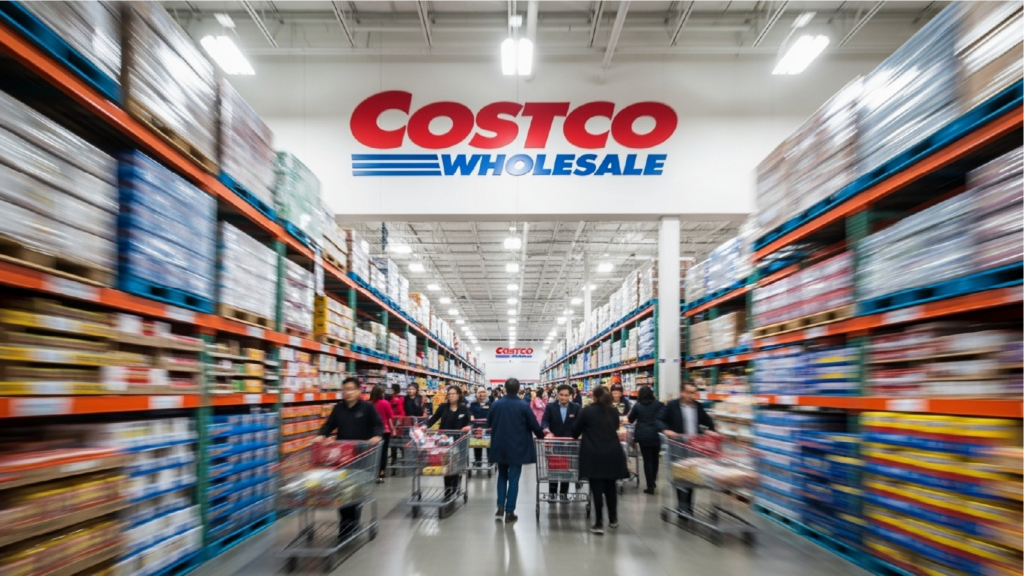
In a world where retailers often guard their technology choices like state secrets, Costco recently took an unusual step by revealing its entire retail media tech stack at NRF. According to The Drum, Costco’s assistant VP of retail media, Mark Williamson, showed everything – from identity resolution vendors to DSP partnerships to clean room providers – to a room full of peers, observers, and competitors.
Why would a retailer expose its technology strategy so openly? The answer isn’t about bragging rights. It’s about clarity, trust, and alignment.
“Retail media at Costco exists to accelerate merchandise sales,” Williamson explained. “Transparency builds trust – for both merchants and advertisers.”
Control Through Partnership
Costco’s approach reflects a simple but important principle. Technology partners don’t need to be something to hide or work around – they’re an integral part of how the system is designed to function. Each partner in the stack plays a distinct role, and together they form a cohesive engine designed to drive better outcomes.
This is where many retailers struggle. As stacks grow and offerings expand, complexity often shows up in fragmented reporting and disconnected insights. The issue isn’t the number of partners, but whether the system is designed to connect them.
Making Multiple Systems Work as One
This is where orchestration becomes the differentiator. Think of it as the connective tissue that connects systems, partners, and data. When done right, orchestration ensures:
- Integrated execution across multiple vendors
- Real-time measurement and optimization
- Alignment between merchants, advertisers, customers, and, importantly, the RMN/CMN teams.
At Infillion, we see this as a broader challenge, with retail media being just one example. As stacks become more fragmented, retailers and brands increasingly need an orchestration layer that brings together data, activation, and measurement so disparate systems – from partners to tools – can operate as a cohesive whole.
Rather than replacing existing partners that are core to the success of the platform, orchestration provides structure: ensuring decisions are coordinated, insights are connected, and execution remains aligned to shared outcomes – regardless of how many technologies are involved.
When systems are designed to work together, transparency becomes easier to sustain. Partners can see how decisions are made, teams can understand how performance is measured, and trust becomes operational rather than aspirational.
Using AI to Manage Complexity
As orchestration becomes more central, intelligence plays an increasingly important role in making it practical at scale. In complex ecosystems, AI agents can support teams by helping to:
- Segment audiences and resolve identity across systems in real time
- Evaluate and recommend activation paths across channels and partners
- Continuously optimize toward defined business outcomes
- Surface insights that are consistent and actionable across teams
In this context, AI doesn’t replace human decision-making or partner support – it enhances it. Agents help reduce operational friction and make composable systems usable, ensuring that coordination holds even as complexity increases.
Architecture That Can Adapt
Costco’s stack illustrates another important idea: intentional flexibility. Each layer of the system – identity, activation, measurement – can evolve independently while still contributing to a unified outcome.
For retailers, this type of composable architecture enables:
- The ability to integrate new partners without disrupting existing workflows
- Consistent, transparent measurement that builds trust with brands and agencies
- A system that can adapt as retail media and commerce strategies continue to mature
As The Drum notes, “Transparency enables collaboration at multiple levels.” Composability makes that transparency operational – allowing retailers to evolve their stacks without sacrificing cohesion.

What This Signals for Retail Media
The real challenge facing retail media today isn’t access to technology, but how effectively that technology is designed to work together.
Costco’s decision to publicly share its stack signals that when infrastructure is intentionally designed, and partners are treated as collaborators, trust grows and execution accelerates in parallel. Transparency becomes a byproduct of confidence, not a risk.
For retailers and brands navigating an increasingly complex commerce media landscape, the takeaway is reassuring. You don’t need to build every layer yourself or have everything perfectly figured out on day one. What matters is choosing the right partners, connecting them through a cohesive orchestration layer, and applying intelligence in a way that ensures the system works as one.
To learn more about how Infillion approaches retail media infrastructure and partnerships, get in touch.
